
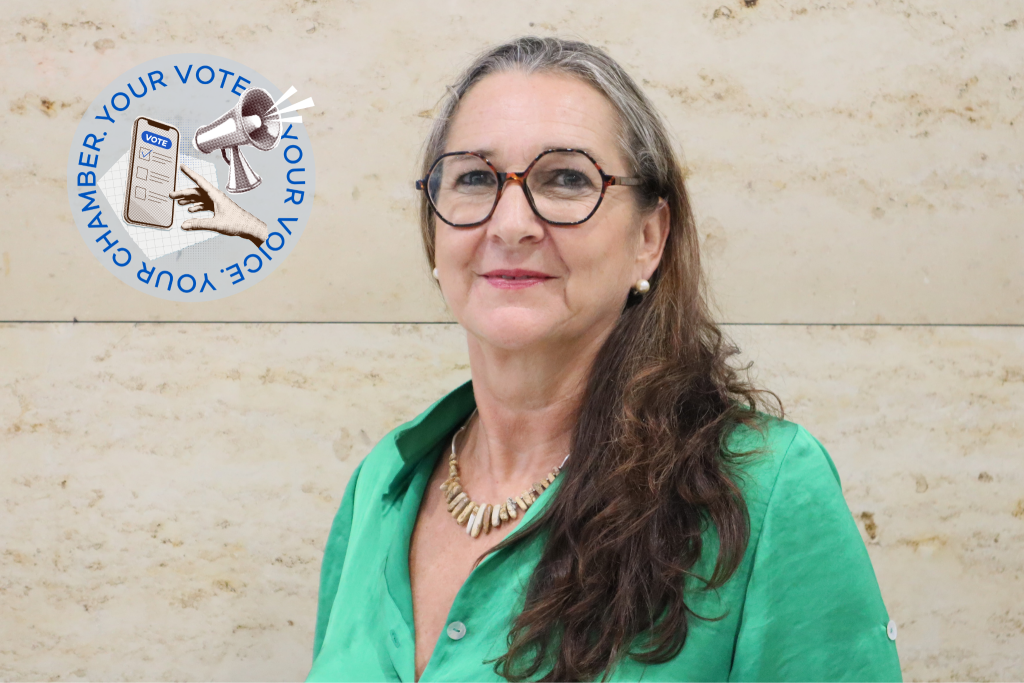
With Committee elections just a few weeks away, we spoke with Caroline Bougon-Sirieix, Secretary General and CHRO/QHSE Director at Cambodia Airports, and Vice-Chair of EuroCham’s Human Resources Committee.
We discussed the transition to Techo International Airport from an HR perspective, the role of EuroCham’s Sectoral Committees in bringing HR professionals together to share best practices, and the widening gap between the skills Cambodia’s labour market needs and the talent currently available.
Caroline shared the lessons learned from managing one of the most significant organisational changes in her team’s history, what has made her tenure as Vice-Chair fulfilling, and why she is running for a second term to help shape the Committee’s focus areas for the next two years.
The last time we spoke, you were preparing for the opening of Techo International Airport and the transition to the new facility. From an HR perspective, what have been the most challenging aspects of the move and how did you manage them? Were there any important lessons you took away from the process?
Caroline: The transition to Techo International Airport has been one of the most significant organisational changes many of our employees have experienced. From an HR perspective, the biggest challenge was not the physical move itself, but ensuring that people remained engaged, informed, and confident throughout the transition.
The move impacted on employees in different ways. Some were concerned about commuting times, transportation arrangements, work-life balance, and adapting to a completely new working environment. At the same time, we needed to ensure operational readiness, workforce continuity, and adequate training for staff who would be working in new facilities and with new processes.
We managed these challenges through proactive communication and employee engagement. We invested considerable effort in sharing information early, listening to concerns, conducting readiness assessments, and working closely with managers to support their teams throughout the transition. Change management became a critical component of the project, and we focused on helping employees understand not only what was changing, but also why the move represented another milestone in Cambodia’s airport sector.
The key lesson I took away from this experience is that successful transformation is ultimately about people. Even the best infrastructure and technology cannot deliver results unless employees are fully prepared, supported, and committed. Transparency, empathy, and continuous communication are essential ingredients for managing change effectively.
Also, the fact that we have well-trained and experienced personnel explained why the transition was rolled out smoothly for the benefit of our customers — airlines, passengers, authorities. In addition, the cooperation from day one between our Cambodian teams and the VINCI Airports experts who came from different airports of the network—France, Scotland, Serbia—to support the transfer preparations was a big plus. Belonging to an extensive airport network is a real benefit as you can actually draw on the experience and knowledge of a large pool of experts.
Our last conversation also came as you had recently stepped into the role of Vice-Chair of the Human Resources Committee, for which you are running again next week. What drew you to the HR Committee, what have been the most fulfilling aspects of your tenure, and what made you decide to join the race for the next mandate at the head of the committee?
Caroline: I was initially drawn to the HR Committee because I strongly believe that human capital is one of the most important drivers of organisational and economic success. Human resources today goes far beyond administrative functions; it plays a strategic role in workforce development, leadership, inclusion, and business sustainability.
During my tenure as Vice-Chair, one of the most fulfilling aspects has been the opportunity to engage with HR professionals from diverse industries and create meaningful discussions around common challenges. The Committee has provided a valuable platform for sharing best practices, promoting professional development, and helping organisations strengthen their people’s strategies.
I have particularly appreciated contributing to initiatives focused on talent development, leadership capability, and workforce readiness. Seeing businesses become more intentional about investing in their people has been extremely rewarding.
My decision to run for another mandate comes from a desire to continue building on the progress we have achieved. Cambodia’s labour market is evolving rapidly, and businesses face new challenges related to talent attraction, retention, skills development, and digital transformation. I believe the Committee can play an even greater role in supporting the HR community, fostering dialogue between stakeholders, and helping organisations prepare for the future of work.
Looking ahead, what do you feel are the most pressing issues facing human resources in Cambodia? What do you foresee as being key focus areas for the HR Committee for the next 2 years?
Caroline: One of the most pressing issues facing HR in Cambodia is the growing gap between the skills that employers need and the skills available in the labour market. As industries become more technology-driven and globally connected, organisations require increasingly specialised capabilities, while competition for qualified talent continues to intensify.
Another important challenge is talent retention. Employees today have greater expectations regarding career development, workplace culture, flexibility, wellbeing, and meaningful work. Organisations that fail to address these expectations may struggle to attract and retain high-performing employees.
Leadership development also remains a priority. As Cambodian organisations continue to grow and mature, there is an increasing need to build strong local leadership pipelines capable of leading diverse teams and navigating complex business environments in a challenging economical context.
Over the next two years, I believe the HR Committee should focus on four key areas:
- Workforce Development and Upskilling
Supporting initiatives and dialogue with the Government that help organisations prepare employees for future skills requirements, particularly in digital and technology-related areas. But also that build the foundations of the new generations who will be the workforce of tomorrow.
- Talent Attraction and Retention
Promoting best practices in employee engagement, employer branding, career development, and total rewards.
- Leadership and People Management Excellence
Strengthening leadership capabilities across all levels of organisations to build resilient and high-performing workplaces.
- Future of Work and HR Transformation
Exploring the impact of digitalisation, artificial intelligence, workforce analytics, and evolving work models on HR practices in Cambodia.
Ultimately, I believe HR has a unique opportunity to help shape Cambodia’s future workforce. By working together across sectors, we can build more agile organisations, develop local talent, and create workplaces where both businesses and employees can thrive.


